
Now that you have learned the strategies to help children serve themselves at mealtime, let’s take a look at some potential barriers and explore possible solutions. The following sections address some of the barriers to teaching children about portion sizes and offer solutions that others have found to be helpful by childcare providers.
It is hard to let children serve the food themselves because it will be messy and unhygienic. It entails more time and work.
Watch this video to learn how to support children as they make messes.
When children self-serve during family meals, it is less work for you because the children will be setting the table, passing the food, serving themselves and cleaning-up. This process engages children and lets you sit at the table to enjoy the meal with the children. There may be more work at the start but then it will be a lot easier! – Early Childhood Educator
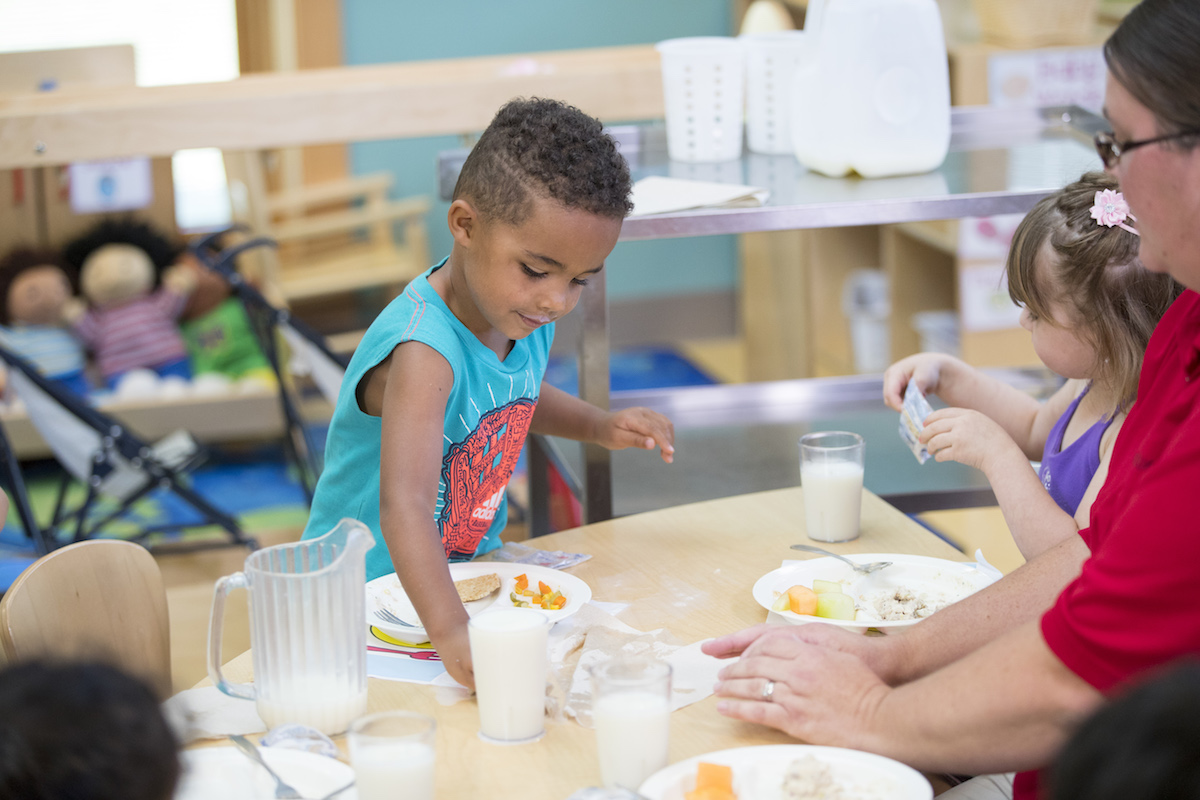
Manage messes. When children serve the food, it is understandable that spills and messes can occur. Here are some tips to manage them:
It is hard to let children serve themselves because they are too young.
Watch the following video to learn how to overcome barriers and challenges related to children serving themselves.
1. Start self-serving as early as one year of age.
Children are learning the skill of self-service at the same time they are learning self-feeding. However, self-service has additional challenges and children need adult guidance. Caregivers play a major role in teaching self-help skills, and can teach children to serve themselves when they are young, at about 18 months old. It’s important that children serve themselves at mealtime.
For example, at this age children can begin practicing pouring water from a pitcher into their own glass. Young children can also practice moving small foods from one plate to another using a spoon.
Recent research demonstrates a clear connection between the development of fine motor skills in early life and later success in math, science, and reading. Self-serving is a great way for children to practice these fine motor skills.
We’ve been doing family meals—by the time they get to my class, they already know how to serve themselves. Just if you keep doing it over and over, they will get it. – Early Childhood Educator
Refer to your workbook for a handout on developmental milestones for children in practicing self-service.
2. Identify Teaching Strategies to Support and Encourage Children’s Developing Skills
After assessing children’s self-serving abilities, identify teaching strategies that can support or encourage children’s developing skills. The teaching strategy should match the fine-motor skill that needs to be strengthened, or the self-service action that the child may need help developing.
Watch the following video to learn how match teaching strategies with children’s fine motor skill needs.
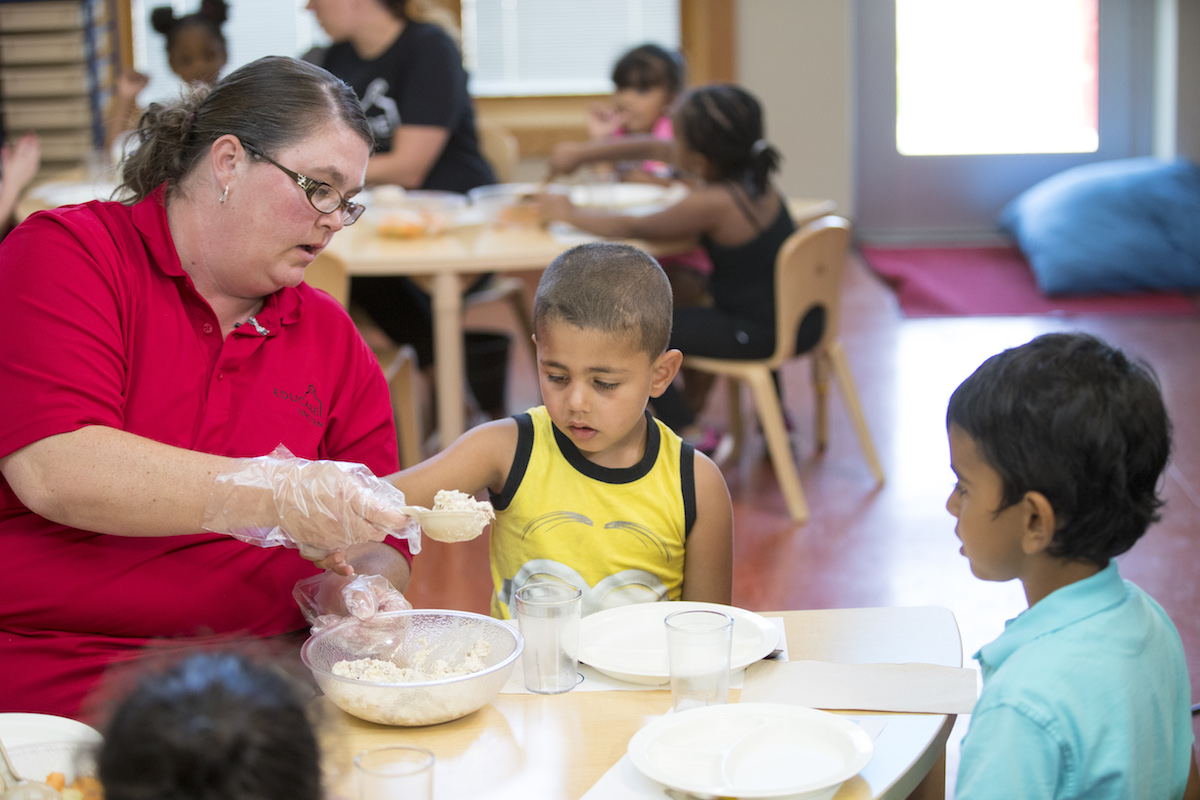
Have Older Children Model for Younger Children
Try using one or more of the following strategies:
Remember that hand-over-hand physical prompts provide children with the most assistance and verbal assists provide the least assistance.

Refer to your workbook for a handout on assessing children's self-service abilities.