PROVIDE CHILD-FRIENDLY TOOLS AND ENVIRONMENTAL SUPPORT
Caregivers can teach children how to serve themselves and provide an environment that prepares children for
self-service and reduces messes at mealtime. Here are some strategies for saving time and energy when implementing
self-service at mealtime.
Provide child-friendly tools for children to be successful at serving themselves.
Young children are successful in serving and feeding themselves when they have appropriately sized dishware that
is suitable for their developmental abilities. Use the following strategies to make self-service easy for
children:
Watch the following video to see how to help children serve themselves by providing dishware,
tools, and utensils that they can easily use.
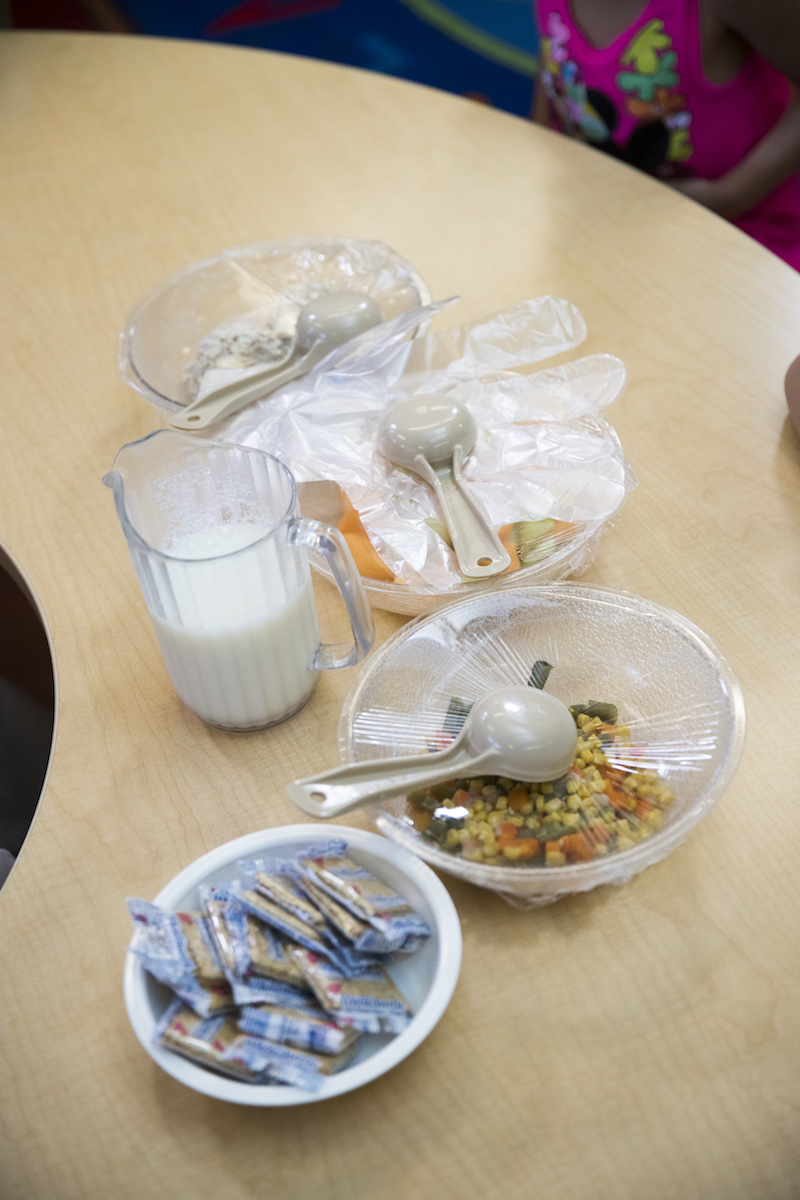
1. Provide dishware that is easy for children to handle.
Examples include:
- Child-sized, light weight, unbreakable utensils
- Shallow serving bowls that hold about 4 cups
- Small pitchers that hold about 1-4 cups
- Measuring cups or scoops for serving
- Short-handed tongs that are 4-6 inches in length
- Eating plates that are 7-8 inches’ diameter
- Drinking glasses that hold 1 cup
Watch the following video to learn how to handle spills effectively.
2. Reduce spills and messes
- Fill pitchers partially full to reduce the weight of the pitcher so that it is easy for the child to
hold.
- Encourage children to fill their cups only half full to reduce spills.
- Keep cleaning supplies such as paper napkins, a child-sized broom, and dust pan near the table.
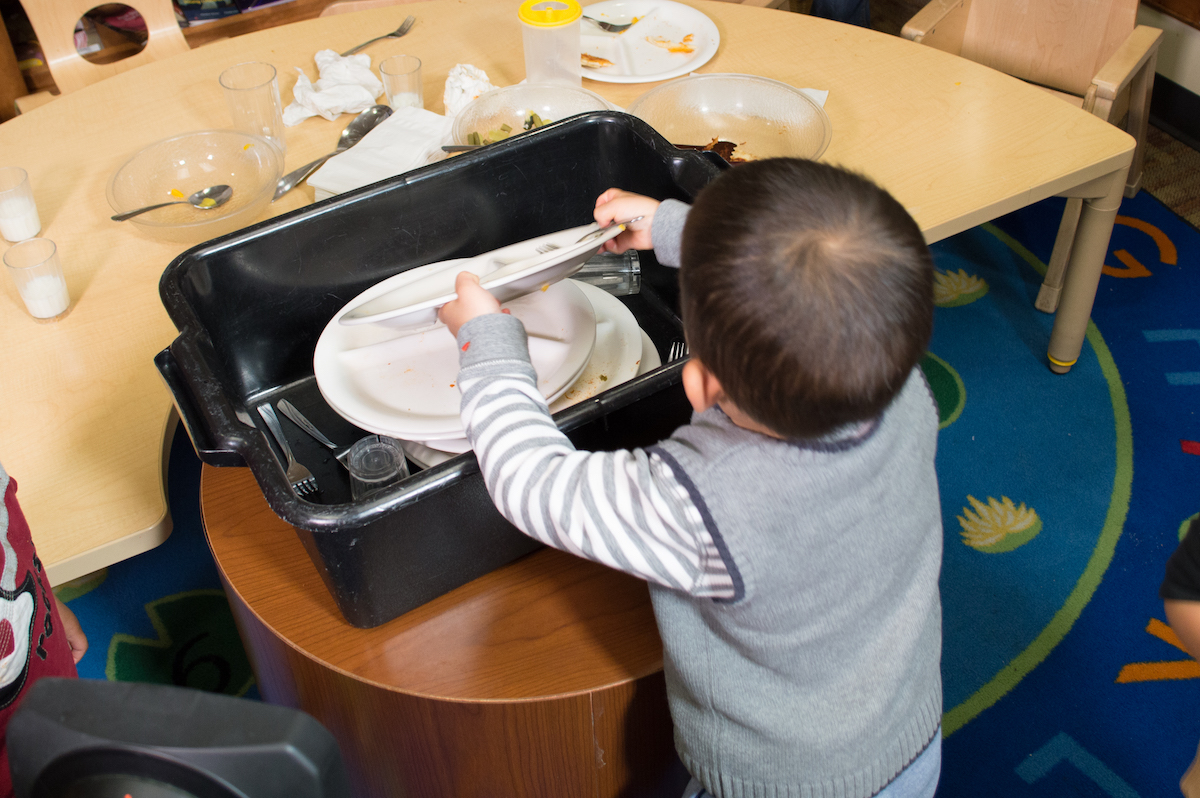
- Provide a tub for dirty dishes and trash close to the meal table and at the child’s level.
- Remember, spills are a way in which children learn. Respond to spills in a consistent and supportive manner
and have the child clean up the spill along with you.
Watch the following video to learn how to prevent contamination of food and maintain hygiene
during self-service.
3. Maintain hygiene and safety
- Practive proper hand-washing.
- Use colored serving utensils and white eating utensils so that children can remember to
avoid licking or eating from colored utensils.
- Provide two sets of measuring cups and tongs for serving in the classroom, in case of contamination.
- Reserve half servings of each food in additional bowls, in case of contamination or second helpings.
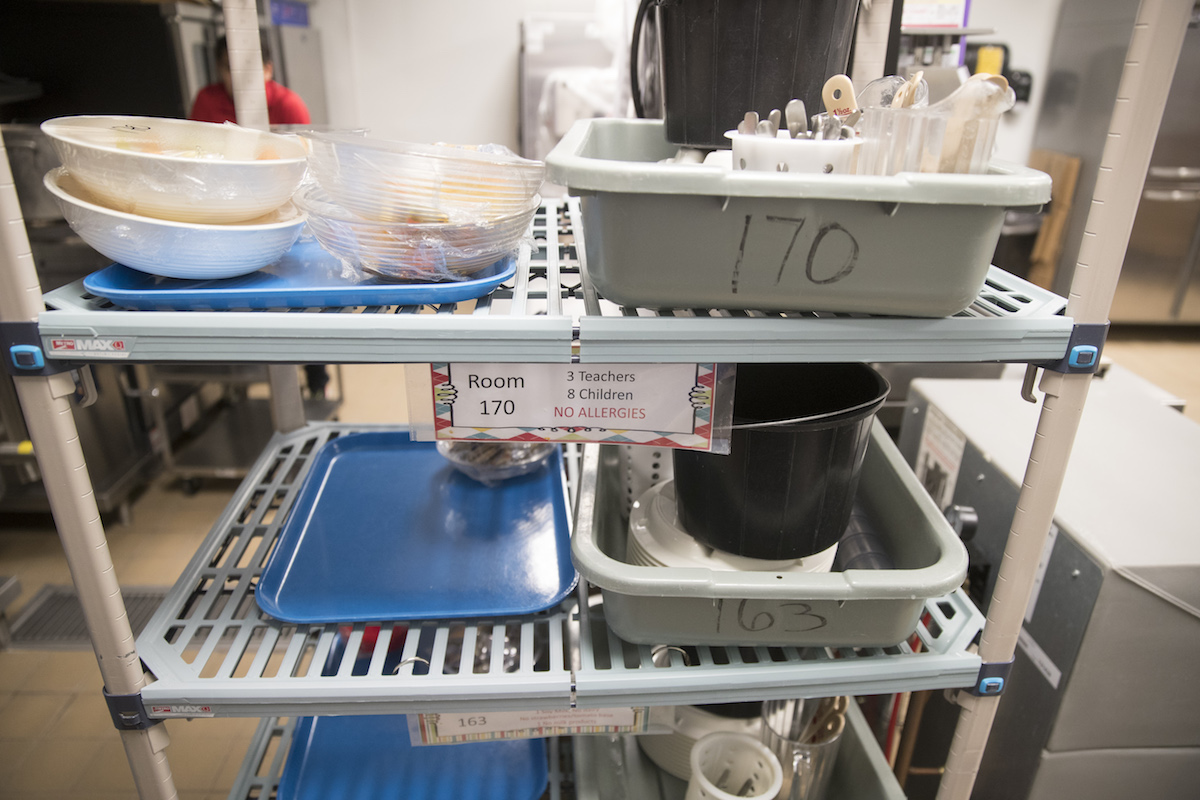
- Keep extra helpings of food on a cart or table nearby.
- Label carts where top racks are to stock food and bottom racks are for dirty dishes.