
Watch the following video to find out about the benefits of teaching children to serve themselves.
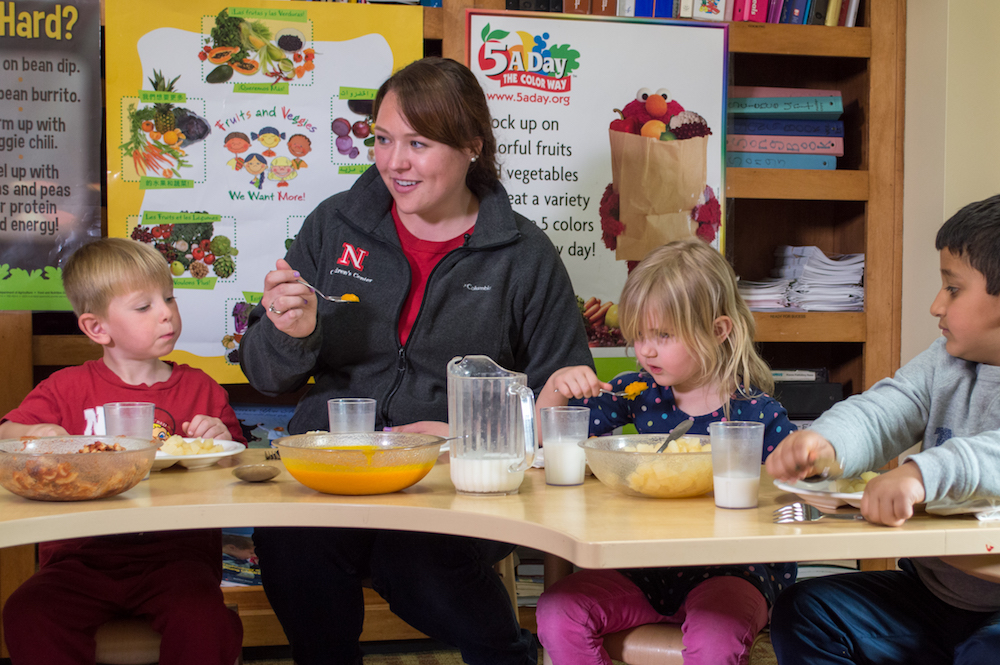
Children can say yes and no instead of food being on their plate and causing distress if something is on their plate and they don’t like it. – Early Childhood Educator
Delegating age-appropriate tasks to young children such as setting the table, serving themselves, passing and sharing the food, and cleaning up can help foster their independence and self-esteem. Children gain a sense of pride and strengthen their sense of belonging to the group when they take an active role during mealtime. As children actively participate and become independent at mealtime, it allows more time for caregivers to sit and enjoy meals with children.
Research Spotlight:
By letting children serve themselves, you are giving them an opportunity to make decisions. They will be enthusiastic and more likely to try new foods when they have the ability to choose.
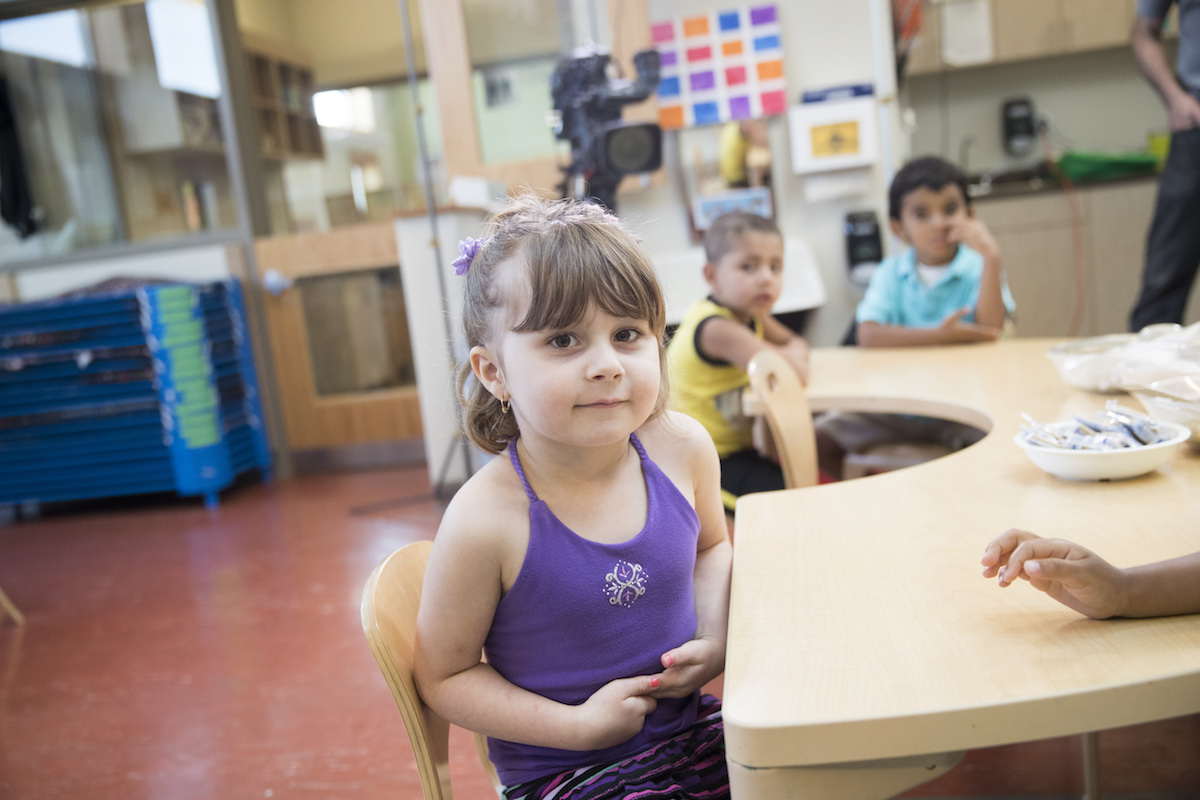
Children will eat when they are hungry and stop eating when they feel full. Adults can help children identify their hunger and fullness signals by (a) allowing children to serve themselves, (b) guiding children to pay attention to their internal signals of hunger and fullness (for example, “You can have more food if you feel hungry”), and (c) responding to these signals once expressed (for example, “If you are full, you can stop eating”). This process supports children’s ability to self-regulate their food intake.
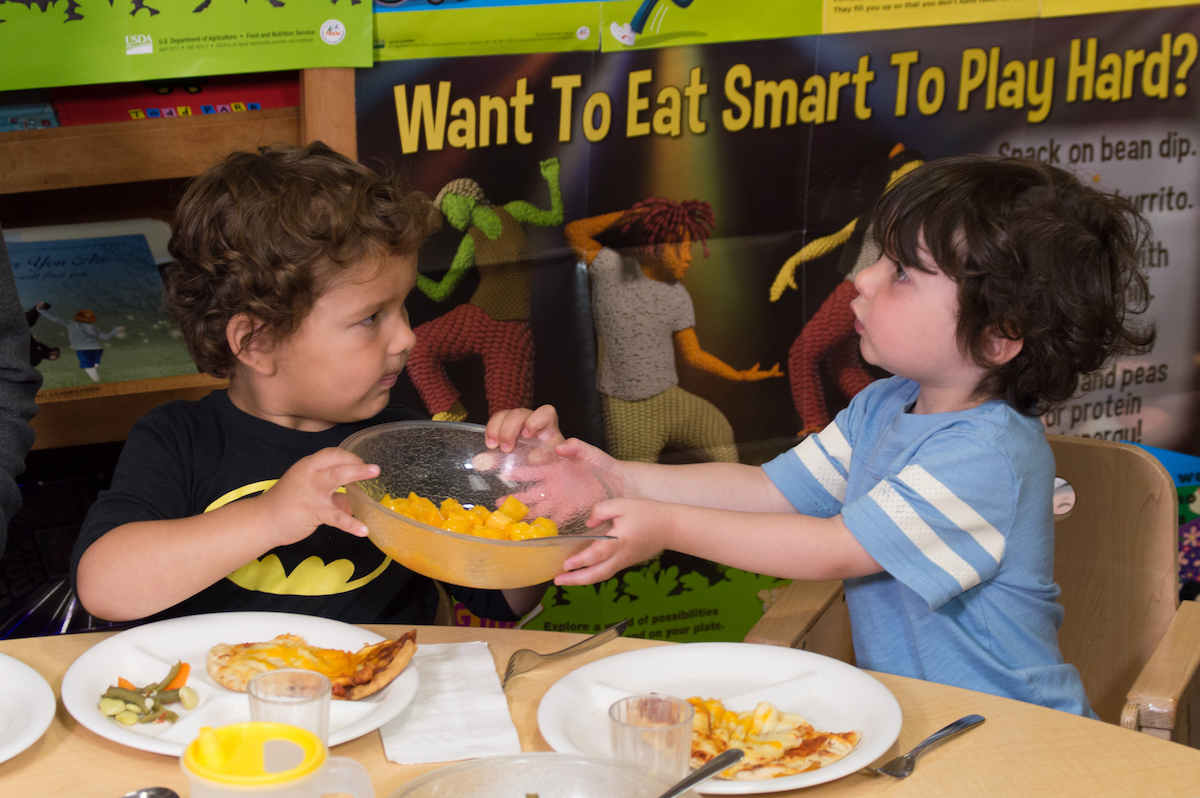
During self-service, children learn to share, pass food around the table, say “please” and “thank you,” and be patient while waiting for their turn. These mealtime experiences help children self-regulate their emotions, learn social skills and table manners.
When children serve themselves, it nurtures their cognitive skills. For example, they can count the number of broccoli florets they put on their plate, or compare the amount of liquid they poured into their cups. – Early Childhood Educator
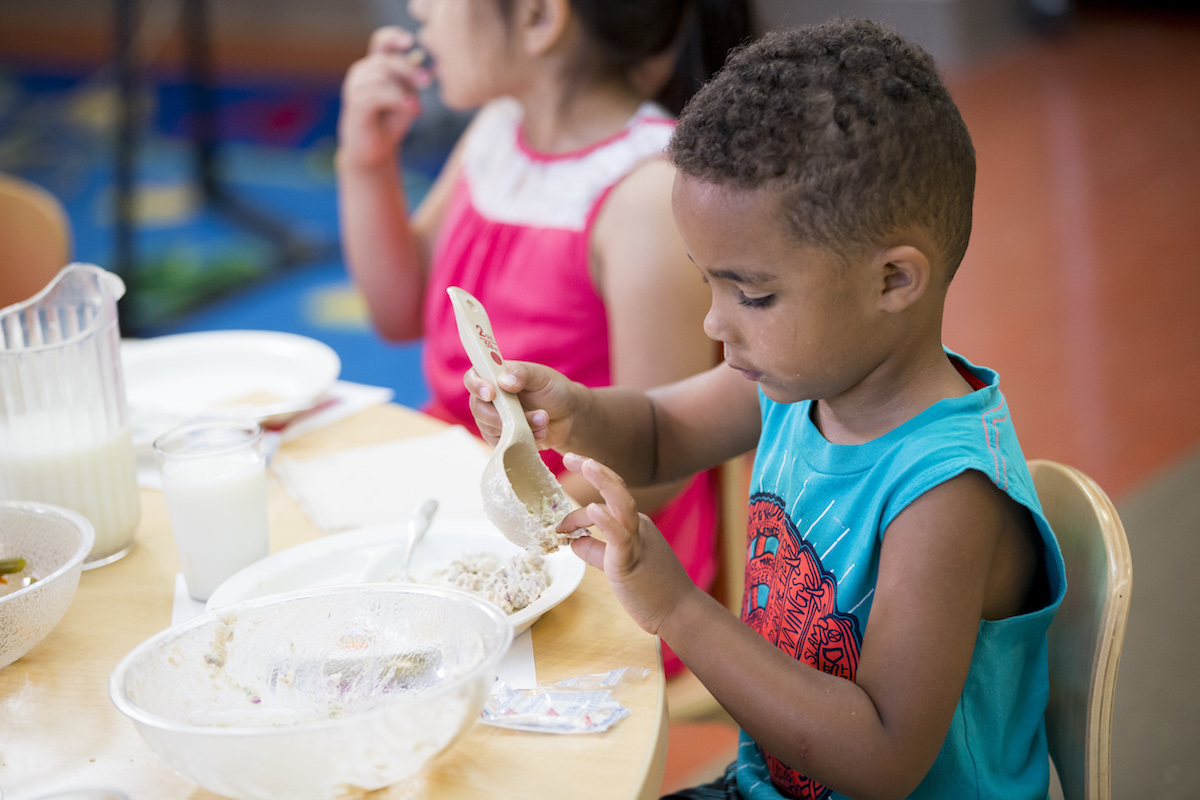
During self-service, children learn to use utensils and pass dishes. They develop fine motor skills such as gripping, grasping, muscle control, bilateral coordination, and manipulation of objects related to scooping, pouring, using tongs, and putting food on their plates. They begin to understand size, shape, weight, and movement concepts, and they develop sensory awareness. Children also improve their eye-hand coordination when they serve themselves.
Allowing children to serve themselves is recommended by the Head Start Program Performance Standards, the Child and Adult Care Food Program (CACFP), the Academy of Nutrition and Dietetics, the American Academy of Pediatrics (AAP), the American Public Health Association (APHA), and the Institute of Medicine (IOM)4. Self-service during family style meals is best practice and allows you to comply with standards.
Research Spotlight:
Preschool children who serve themselves waste less food and eat about 25% less than children who are served pre-plated meals.
Note: Try answering the questions below. Take your best guess! This will not be graded/scored. It is OK if you do not know the answer.